What a Million Users Know That No Designer Does
Designers decide for millions based on what they learn from a few. How adaptive products turn every user's choices into UX research at the scale of the whole product.


Attalu is made of two parts. Attalu Studio is where designers and developers build the product and define its rules: what can change, for whom, and why. The Agora is where users experience the result: a product that reshapes itself around each of them. Between the two, Attalu Models turn the designer’s rules and real usage into new interfaces, built only from approved parts.
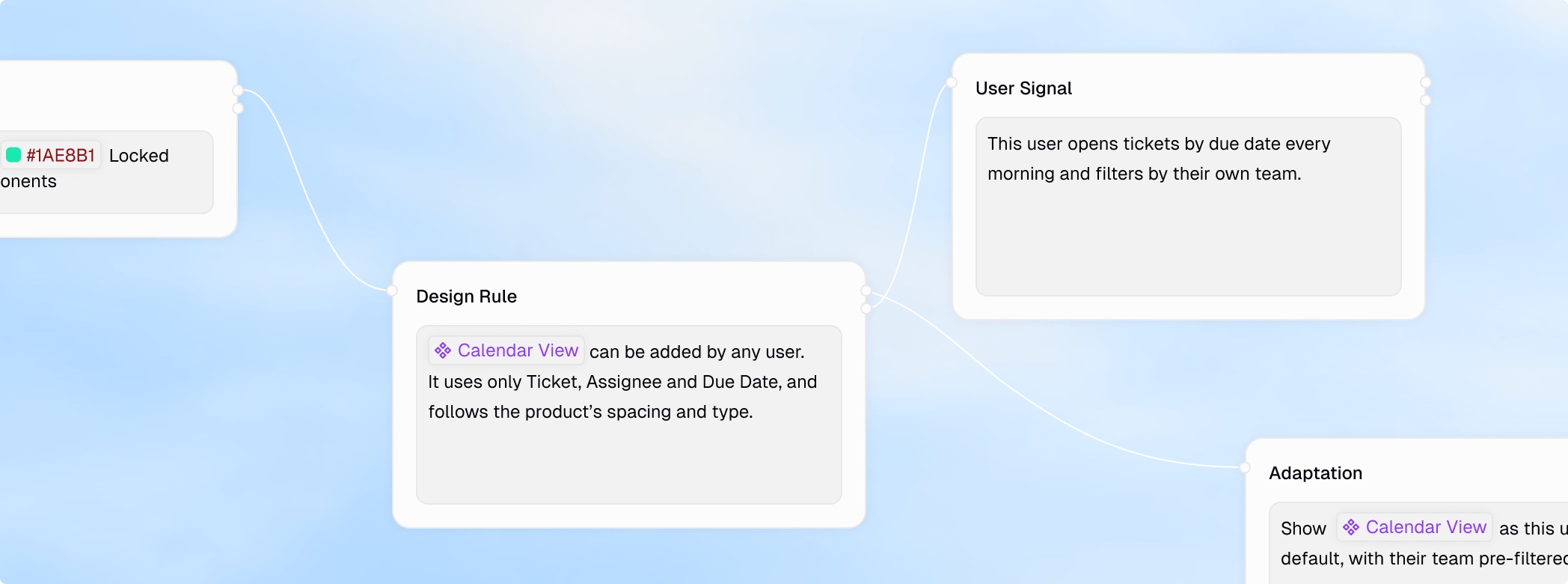
Every part of Attalu is built on four principles. Together, they make adaptive experience something a company can trust: decided by its designers, secure by default, informed by real use, and ready to ship.
Attalu Studio
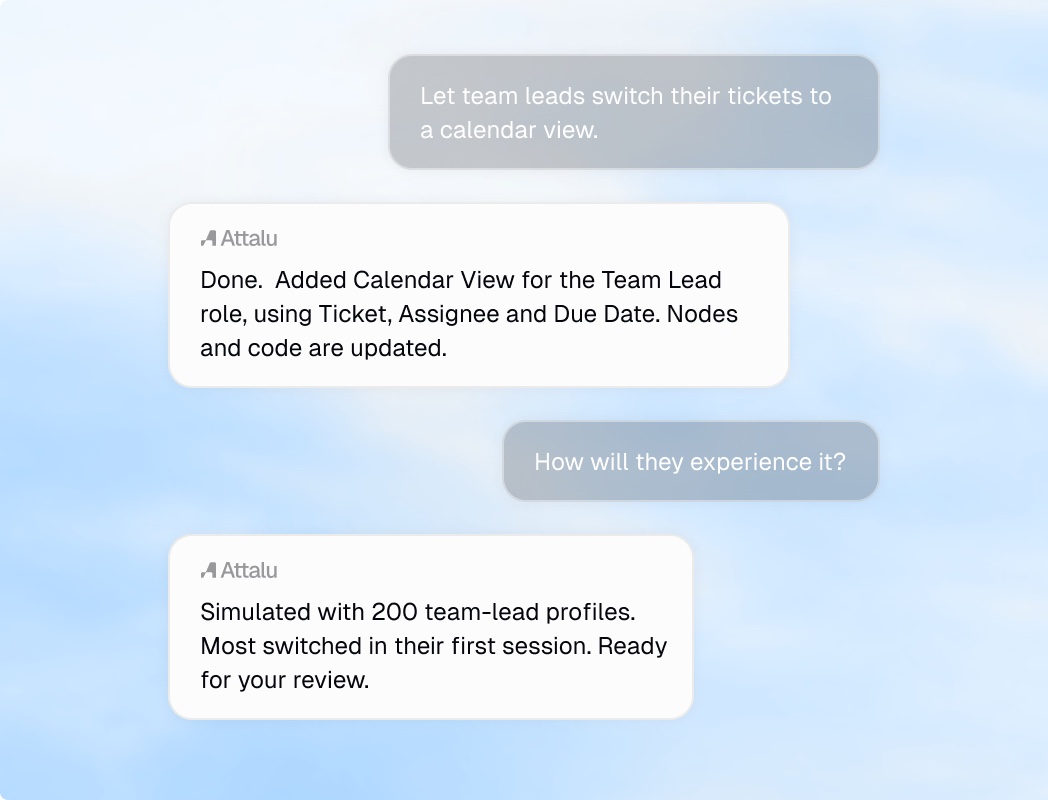
Attalu Studio is one tool seen at four depths. Work at whichever one fits the task: every change flows down through the layers below it, so design, logic, testing and code always stay in sync.
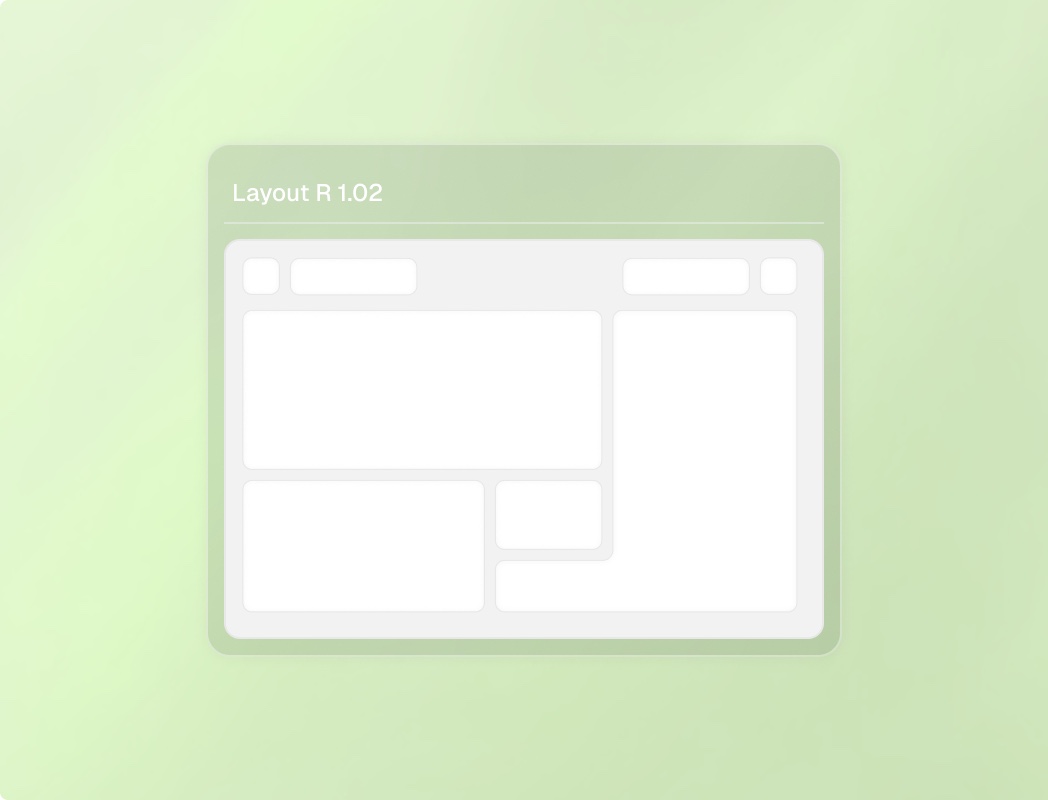
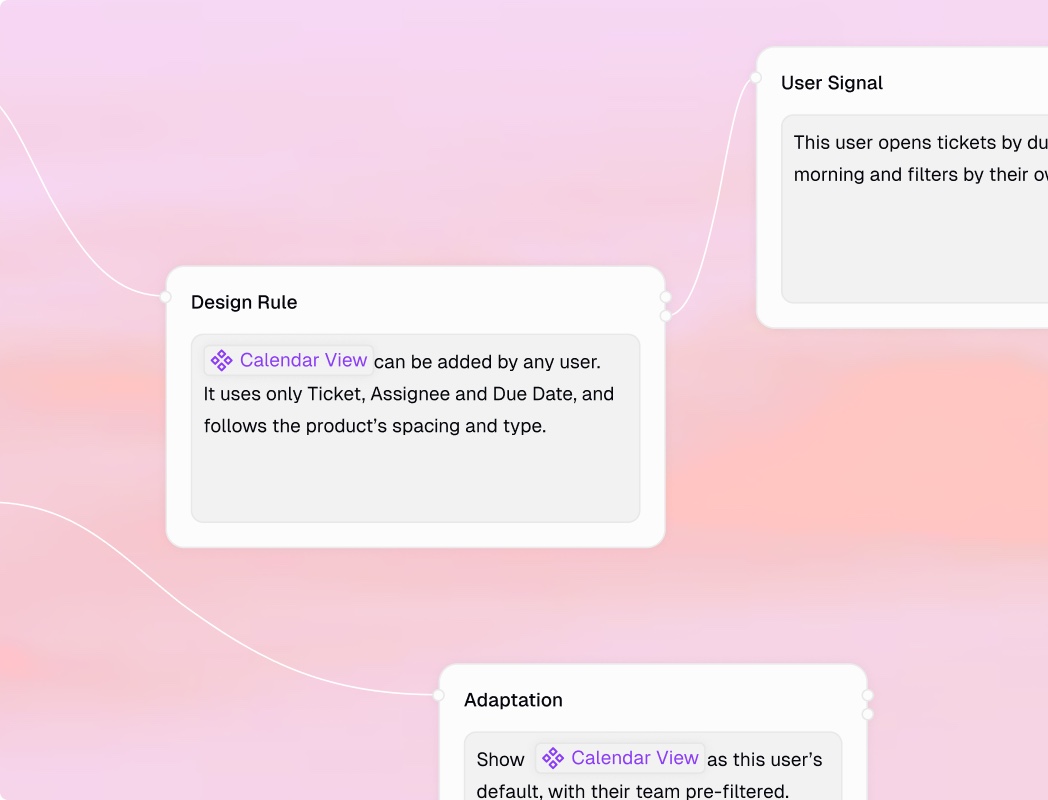
Design the product the way you always have, with one difference: every screen carries your intent. Notes on behavior, priorities and limits shape how the product is built and how it adapts, making designer and developer one role.
Screens, components, intent notes
Designers decide for millions based on what they learn from a few. How adaptive products turn every user's choices into UX research at the scale of the whole product.
AI made screens abundant, so the value of design moves into judgment. Why a designer's reasoning has to become explicit enough for AI to follow.
Software keeps growing while every user still gets the same interface. Why we named our product after the agora, and why products should adapt to each person using them.